

Small Greenhouse Ideas: Grow Big in a Tiny Space
Imagine stepping into a vibrant oasis bursting with life, even when the world outside is draped in winter's gray. That's the magic a greenhouse can bring, and you don't need acres of land to enjoy it. Even the smallest of spaces can be transformed into a flourishing paradise with the right planning and a dash of creativity. Let's explore a wealth of small greenhouse ideas to help you cultivate your green dreams, no matter how limited your area may be.
Why Choose a Small Greenhouse?
Before we dive into the specifics, let's consider the compelling reasons to opt for a smaller greenhouse footprint.
**Space Efficiency:The most obvious benefit. Small greenhouses excel in maximizing limited spaces like balconies, patios, or small yards.
**Cost-Effective:Smaller structures inherently require less material, translating to lower upfront costs. Heating and maintenance are also more manageable.
**Manageability:A smaller space is simply easier to control. Temperature, humidity, and pest management become less daunting.
**Extended Growing Season:Small greenhouses provide a protected environment, allowing you to start seedlings earlier in the spring and extend the harvest well into the fall.
**Year-Round Growing (with modifications):With supplemental heating and lighting, even a small greenhouse can provide fresh produce and vibrant blooms throughout the year.
**Accessibility:A smaller greenhouse is easier to access and maintain, perfect for gardeners with mobility challenges.
Types of Small Greenhouses: Finding the Perfect Fit
The world of small greenhouses is surprisingly diverse. Let's explore some popular options to help you discover the ideal style for your needs and space:
Mini Greenhouses/Cold Frames
**Description:These are the smallest and most affordable options, often featuring a simple frame with a clear plastic or glass cover. They're perfect for starting seedlings, hardening off young plants, or protecting vulnerable crops from frost.
**Best For:Seed starting, extending the growing season for individual plants, protecting against light frost.
**Placement:Decks, patios, raised beds, or directly on the ground.
**Pros:Inexpensive, portable, easy to assemble.
**Cons:Limited space, may require venting on warm days to prevent overheating.
Pop-Up Greenhouses
**Description:These greenhouses utilize a collapsible frame covered in clear plastic. They offer a bit more space than cold frames and are incredibly easy to set up and take down.
**Best For:Temporary plant protection, overwintering tender plants, creating a humid environment for tropicals.
**Placement:Patios, decks, or small yards.
**Pros:Extremely portable, easy to set up and store, affordable.
**Cons:Can be flimsy, may not withstand strong winds, limited insulation.
Lean-To Greenhouses
**Description:These greenhouses attach to an existing structure, such as a house or garage, utilizing the building's wall for support and insulation.
**Best For:Maximizing space in small yards, providing easy access from the house, taking advantage of existing heat sources.
**Placement:Against a south-facing wall for optimal sunlight.
**Pros:Efficient use of space, potentially lower heating costs, easy access.
**Cons:Requires an existing structure, may limit sunlight exposure depending on the wall's orientation.
A-Frame Greenhouses
**Description:These greenhouses have a classic A-frame shape, offering good headroom and efficient use of space.
**Best For:Growing a variety of plants, providing a visually appealing structure, offering good ventilation.
**Placement:Small yards, gardens, or even rooftops (with proper reinforcement).
**Pros:Sturdy construction, good headroom, aesthetically pleasing.
**Cons:Can be more expensive than other options, requires more space than lean-to or cold frame models.
Geodesic Dome Greenhouses
**Description:These unique greenhouses are constructed from interconnected triangles, creating a strong and energy-efficient structure.
**Best For:Withstanding harsh weather conditions, maximizing sunlight penetration, creating a unique garden feature.
**Placement:Open areas with plenty of sunlight.
**Pros:Extremely strong and durable, energy-efficient, visually striking.
**Cons:Can be more challenging to assemble, may require specialized materials.
Vertical Greenhouses
**Description:This innovative approach maximizes vertical space, making it ideal for balconies, patios, and other areas with limited horizontal room. They often incorporate tiered shelving or vertical planting systems.
**Best For:Growing herbs, leafy greens, strawberries, and other compact plants in small spaces.
**Placement:Balconies, patios, rooftops, or small yards.
**Pros:Excellent space utilization, aesthetically pleasing, can be incorporated into urban gardens.
**Cons:May require more frequent watering and fertilization, can be more expensive than traditional greenhouses.
Choosing the Right Materials
The materials used in your small greenhouse construction will significantly impact its durability, insulation, and light transmission. Here’s a breakdown of common choices:
**Framing:**
**Wood:A classic and aesthetically pleasing option. Choose rot-resistant wood like cedar or redwood.
**Metal:Aluminum and galvanized steel are popular choices for their strength and resistance to rust.
**PVC:A lightweight and inexpensive option, but it can become brittle in extreme temperatures.
**Glazing (Covering):**
**Polyethylene Film:The most affordable option, but it has a shorter lifespan and lower light transmission than other materials.
**Polycarbonate Panels:A durable and impact-resistant choice with excellent light transmission and insulation.
**Glass:Provides excellent light transmission and a classic look, but it's heavier and more prone to breakage than other options.
**Acrylic:A lightweight and shatter-resistant alternative to glass with good light transmission.
Small Greenhouse Ideas: Maximizing Space and Efficiency
Now, let's delve into specific ideas to make the most of your small greenhouse:
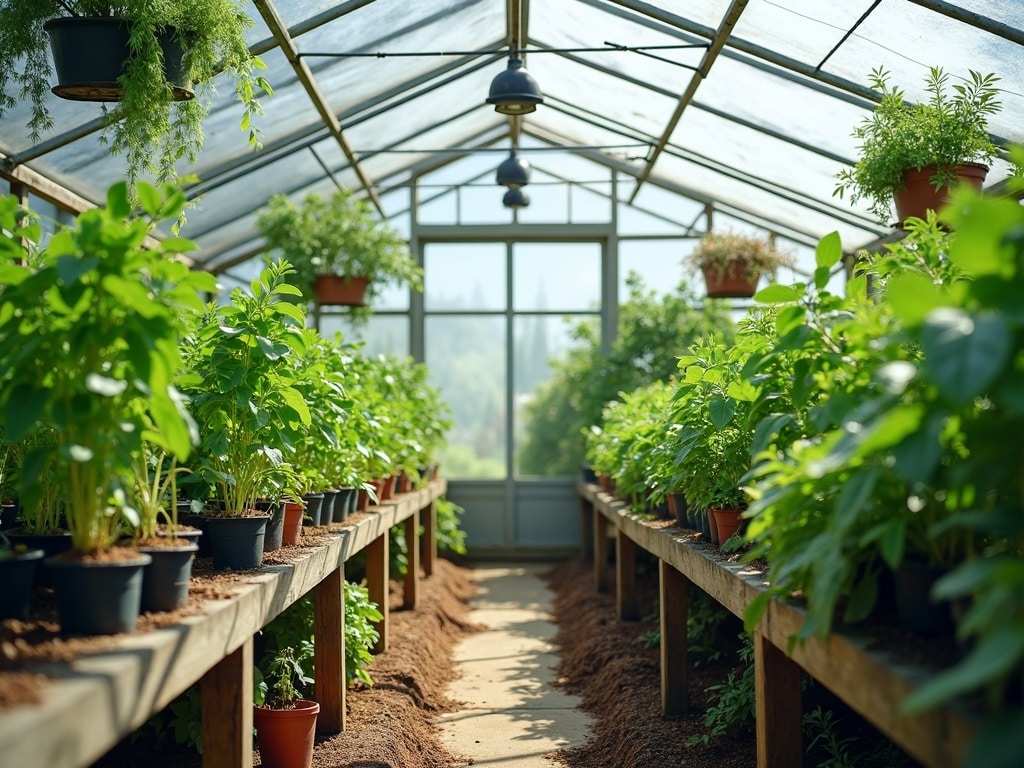
Optimize Vertical Space
**Tiered Shelving:Install shelves to create multiple growing levels, maximizing space for seedlings, herbs, and smaller plants.
**Hanging Baskets:Hang baskets from the roof or frame to grow trailing plants like strawberries, tomatoes, or herbs.
**Vertical Pallet Gardens:Repurpose pallets to create a vertical garden wall for growing herbs, succulents, or leafy greens.
**Trellises and Climbing Structures:Encourage vining plants like cucumbers, beans, or tomatoes to grow vertically, saving valuable ground space.
**Stackable Planters:Utilize stackable planters to create a tower of flowers, herbs, or vegetables.
Smart Layout and Organization
**Prioritize Sunlight:Position your greenhouse to maximize sunlight exposure, especially during the winter months.
**Create Designated Zones:Divide your greenhouse into zones for different purposes, such as seed starting, growing leafy greens, or overwintering tender plants.
**Maximize Walkways:Keep walkways clear and wide enough to easily access all plants.
**Use Labels and Markers:Label all your plants to keep track of what you're growing and when you planted it.
**Foldable or Collapsible Furniture:Use foldable tables or chairs that can be easily stored when not in use.
Efficient Watering Techniques
**Drip Irrigation:Install a drip irrigation system to deliver water directly to the roots of your plants, minimizing water waste and preventing fungal diseases.
**Self-Watering Containers:Use self-watering containers to reduce the frequency of watering and ensure your plants receive consistent moisture.
**Rainwater Harvesting:Collect rainwater in a rain barrel and use it to water your plants, saving water and reducing your water bill.
**Watering Cans with Long Spouts:Use watering cans with long spouts to reach plants in the back of the greenhouse without disturbing other plants.
Temperature and Humidity Control
**Ventilation:Install vents or automated vent openers to regulate the temperature and humidity inside the greenhouse.
**Shade Cloth:Use shade cloth to reduce the intensity of sunlight during the hottest months and prevent plants from overheating.
**Heaters:Use a greenhouse heater to maintain a consistent temperature during the winter months.
**Fans:Install fans to circulate air and prevent the buildup of humidity, which can lead to fungal diseases.
**Humidity Monitor:Use a hygrometer to monitor the humidity levels inside the greenhouse and adjust ventilation accordingly.
Pest and Disease Management
**Good Ventilation:Proper ventilation helps to prevent the buildup of humidity, which can create a favorable environment for pests and diseases.
**Regular Inspection:Inspect your plants regularly for signs of pests or diseases.
**Beneficial Insects:Introduce beneficial insects like ladybugs or lacewings to control pests.
**Organic Pest Control:Use organic pest control methods like neem oil or insecticidal soap to control pests without harming beneficial insects or the environment.
**Disease-Resistant Varieties:Choose disease-resistant plant varieties to reduce the risk of disease outbreaks.
Choosing the Right Plants
**Consider Size:Select compact plant varieties that won't outgrow your small greenhouse.
**Match Growing Conditions:Choose plants that thrive in the temperature and humidity levels of your greenhouse.
**Succession Planting:Plant crops in succession to ensure a continuous harvest throughout the growing season.
**Companion Planting:Use companion planting techniques to improve plant health and deter pests.
**Focus on High-Value Crops:Grow crops that are expensive or difficult to find in local stores.
Creative Small Greenhouse Ideas on a Budget
Don't let a limited budget hold you back from enjoying the benefits of a small greenhouse. Here are some cost-effective ideas:
**Repurpose Materials:Use recycled materials like old windows, doors, or pallets to build your greenhouse.
**DIY Frames:Build a simple frame from PVC pipes or wooden planks.
**Plastic Sheeting:Use heavy-duty plastic sheeting as a glazing material.
**Thrift Store Finds:Look for used pots, tools, and other gardening supplies at thrift stores or garage sales.
**Seed Starting Kits:Start your own seeds indoors using inexpensive seed starting kits.
**Composting:Create your own compost from kitchen scraps and yard waste to enrich your soil.
Adapting Your Greenhouse to Different Climates
The success of your small greenhouse depends on adapting it to your local climate. Here are some considerations for different regions:
**Cold Climates:**
**Insulation:Insulate your greenhouse with bubble wrap or other insulating materials.
**Heating:Use a greenhouse heater to maintain a consistent temperature.
**Double Glazing:Consider using double-glazed panels for better insulation.
**Thermal Mass:Incorporate thermal mass materials like water barrels or rocks to absorb and release heat.
**Hot Climates:**
**Ventilation:Provide ample ventilation to prevent overheating.
**Shade Cloth:Use shade cloth to reduce the intensity of sunlight.
**Evaporative Cooling:Consider using evaporative coolers to lower the temperature inside the greenhouse.
**White Wash:Apply a white wash to the glazing to reflect sunlight.
**Windy Climates:**
**Sturdy Construction:Build a strong and wind-resistant greenhouse.
**Windbreaks:Plant windbreaks around the greenhouse to protect it from strong winds.
**Anchoring:Secure the greenhouse to the ground with anchors.
Small Greenhouse Ideas for Specific Plants
Let's explore some ideas for growing specific types of plants in your small greenhouse:
**Tomatoes:**
**Trellising:Provide support for tomato plants with trellises or cages.
**Pruning:Prune tomato plants to improve air circulation and fruit production.
**Pollination:Hand-pollinate tomato flowers to ensure fruit set.
**Herbs:**
**Well-Draining Soil:Plant herbs in well-draining soil to prevent root rot.
**Regular Harvesting:Harvest herbs regularly to encourage new growth.
**Aromatic Varieties:Grow aromatic herbs like basil, mint, and rosemary.
**Lettuce and Greens:**
**Succession Planting:Plant lettuce and greens in succession to ensure a continuous harvest.
**Shade:Provide shade during the hottest months to prevent bolting.
**Cut-and-Come-Again Harvesting:Harvest lettuce and greens using the cut-and-come-again method.
**Orchids:**
**Humidity:Maintain high humidity levels for orchids.
**Air Circulation:Provide good air circulation to prevent fungal diseases.
**Indirect Light:Provide indirect light to prevent leaf burn.
Maintaining Your Small Greenhouse
Regular maintenance is essential for keeping your small greenhouse in good condition. Here are some key tasks:
**Cleaning:Clean the glazing regularly to maximize light transmission.
**Inspecting:Inspect the frame and glazing for damage and make repairs as needed.
**Ventilation:Ensure that vents are functioning properly.
**Pest Control:Monitor for pests and diseases and take action as needed.
**Soil Management:Replenish the soil with compost or other organic matter.
Troubleshooting Common Problems
Even with careful planning and maintenance, you may encounter some common problems in your small greenhouse. Here are some solutions:
**Overheating:Improve ventilation or use shade cloth to reduce the temperature.
**High Humidity:Increase ventilation to reduce humidity levels.
**Pests:Use organic pest control methods to eliminate pests.
**Diseases:Improve air circulation and use disease-resistant varieties to prevent diseases.
**Poor Growth:Check the soil pH and nutrient levels and adjust as needed.
Small Greenhouse Kits vs. DIY: Which is Right for You?
Choosing between a greenhouse kit and a DIY build depends on your skills, budget, and time commitment.
**Greenhouse Kits:**
**Pros:Convenient, pre-cut and pre-drilled materials, detailed instructions, often include essential components like vents and shelving.
**Cons:Can be more expensive than DIY, limited customization options.
**DIY Greenhouses:**
**Pros:More affordable, greater customization options, allows you to use recycled materials.
**Cons:Requires more time and effort, may require specialized tools and skills.
Expanding Your Small Greenhouse Knowledge
**Local Gardening Clubs:Join a local gardening club to learn from experienced gardeners.
**Online Forums:Participate in online gardening forums to ask questions and share tips.
**Books and Magazines:Read books and magazines about greenhouse gardening.
**Workshops and Seminars:Attend workshops and seminars on greenhouse gardening.
**Experimentation:Don't be afraid to experiment and try new things in your greenhouse.
Conclusion: A Tiny Space, a World of Possibilities
As we've seen, limited space is no barrier to cultivating a thriving garden oasis. These small greenhouse ideas unlock a world of possibility, allowing you to nurture your green thumb, extend your growing season, and enjoy fresh, homegrown produce year-round. Whether you opt for a simple cold frame, a stylish lean-to, or a creative vertical design, the key is to maximize space, optimize growing conditions, and choose plants that thrive in a controlled environment. So, embrace the challenge, get creative, and transform your small space into a flourishing haven – a testament to the fact that even the tiniest greenhouse can yield the greatest rewards. Happy growing!