
Backyard Greenhouse Tips: Transforming Your Garden Dreams into Reality
Imagine stepping into your backyard and entering a lush, vibrant world teeming with life, even in the dead of winter. A backyard greenhouse isn't just a structure; it's a gateway to extending your growing season, cultivating exotic plants, and enjoying the therapeutic benefits of gardening year-round. But before you dive headfirst into this exciting venture, let's explore some essential backyard greenhouse tips to help you create a thriving oasis.
Planning Your Backyard Greenhouse: Laying the Foundation for Success
The success of your backyard greenhouse hinges on meticulous planning. It's not just about erecting a structure; it's about creating an environment that caters to the specific needs of your plants. Consider these crucial aspects:
1. Location, Location, Location: Sunlight and Accessibility
Choosing the right location is paramount. Your greenhouse needs ample sunlight, ideally at least six hours a day, especially during the winter months. A south-facing location is generally ideal in the Northern Hemisphere. However, consider the angle of the sun throughout the year and potential obstructions like trees or buildings.
Accessibility is another key factor. You'll need easy access to water and electricity. Think about how you'll transport supplies, like soil and fertilizer, to and from the greenhouse. A location close to your house offers convenience, especially during inclement weather.
2. Size Matters: Matching Your Greenhouse to Your Needs
Determining the right size for your greenhouse depends on your gardening goals and available space. A small greenhouse (6×8 feet) might be sufficient for starting seedlings or overwintering a few tender plants. However, if you envision a more ambitious project, such as growing a wide variety of vegetables or cultivating tropical plants, you'll need a larger structure.
Consider the height of your greenhouse as well. Higher ceilings provide better air circulation and can accommodate taller plants. Think about future expansion possibilities too. Can you easily add onto the greenhouse if your needs change?
3. Greenhouse Types: Choosing the Right Structure
Greenhouses come in various shapes and sizes, each with its own advantages and disadvantages. Here are a few popular types:
- Hoop Houses: These are the most affordable and easiest to construct. They consist of arched hoops covered with polyethylene film. Hoop houses are ideal for extending the growing season for vegetables.
- Gable Greenhouses: These greenhouses have a traditional A-frame design, offering good light penetration and ample headroom. They are a popular choice for home gardeners.
- Quonset Greenhouses: Similar to hoop houses but with a more rounded shape, Quonset greenhouses are sturdy and weather-resistant.
- Lean-To Greenhouses: These greenhouses attach to an existing building, such as your house or garage. They are a good option if you have limited space.
- Geodesic Dome Greenhouses: These unique greenhouses are known for their strength and energy efficiency. They offer excellent light distribution.
The best type for you depends on your budget, space, and aesthetic preferences. Research each type thoroughly before making a decision.
4. Budgeting for Your Greenhouse: Costs and Considerations
The cost of a backyard greenhouse can vary widely depending on the size, materials, and features. Hoop houses are generally the most affordable, while more elaborate structures can cost thousands of dollars.
Consider these costs when budgeting:
- Greenhouse Structure: This is the main expense. Compare prices from different suppliers.
- Foundation: A solid foundation is essential for stability. Options include concrete slabs, gravel beds, or wooden frames.
- Heating and Cooling: Depending on your climate, you may need to invest in heating and cooling systems to maintain optimal temperatures.
- Ventilation: Proper ventilation is crucial for preventing overheating and humidity buildup.
- Watering System: An automated watering system can save you time and effort.
- Electricity: You'll need electricity for lighting, heating, and ventilation.
- Benches and Shelving: These provide space for plants and supplies.
- Soil and Fertilizer: Don't forget the essential ingredients for growing healthy plants.
Create a detailed budget to avoid unexpected expenses. Consider starting small and adding features as needed.
Optimizing Your Greenhouse Environment: Creating the Perfect Climate
Once your greenhouse is built, the next step is to create an optimal environment for your plants. This involves carefully managing temperature, humidity, ventilation, and lighting.
1. Temperature Control: Heating and Cooling Strategies
Maintaining a consistent temperature is crucial for plant growth. The ideal temperature range depends on the types of plants you're growing, but generally, a temperature between 60-80°F (15-27°C) during the day and 50-65°F (10-18°C) at night is suitable for most plants.
Here are some heating options:
- Electric Heaters: These are easy to install and provide consistent heat. Choose a heater with a thermostat for precise temperature control.
- Propane Heaters: Propane heaters are more powerful than electric heaters and can heat larger greenhouses. However, they require proper ventilation to prevent carbon monoxide buildup.
- Natural Gas Heaters: Natural gas heaters are a cost-effective option if you have access to a natural gas line.
- Wood Stoves: Wood stoves can provide a rustic and efficient heating solution, but they require more maintenance.
- Solar Heating: Solar heating systems use solar panels to collect heat during the day and store it for use at night.
Cooling your greenhouse is equally important, especially during the summer months. Here are some cooling strategies:
- Ventilation: Natural ventilation is the most energy-efficient cooling method. Install vents at the top and bottom of your greenhouse to allow hot air to escape and cool air to enter.
- Shade Cloth: Shade cloth reduces the amount of sunlight entering the greenhouse, preventing overheating.
- Evaporative Coolers: Evaporative coolers use the process of evaporation to cool the air. They are effective in dry climates.
- Air Conditioners: Air conditioners provide the most reliable cooling, but they are also the most expensive.
Monitor the temperature in your greenhouse regularly using a thermometer. Adjust your heating and cooling systems as needed to maintain optimal conditions.
2. Humidity Management: Balancing Moisture Levels
Humidity is another critical factor in greenhouse growing. High humidity can lead to fungal diseases, while low humidity can stress plants. The ideal humidity level depends on the types of plants you're growing, but generally, a humidity level between 50-70% is suitable for most plants.
Here are some ways to control humidity:
- Ventilation: Ventilation helps to reduce humidity levels by allowing moist air to escape.
- Watering Practices: Water plants in the morning to allow the foliage to dry before nightfall. Avoid overwatering.
- Humidifiers: Humidifiers can increase humidity levels in dry climates.
- Dehumidifiers: Dehumidifiers can reduce humidity levels in humid climates.
Monitor the humidity in your greenhouse using a hygrometer. Adjust your humidity control measures as needed to maintain optimal conditions.
3. Ventilation Strategies: Ensuring Air Circulation
Proper ventilation is essential for healthy plant growth. Ventilation provides fresh air, reduces humidity, and prevents the buildup of stagnant air, which can promote fungal diseases.
Here are some ventilation strategies:
- Natural Ventilation: Install vents at the top and bottom of your greenhouse to allow for natural airflow. Open the vents during the day to allow hot air to escape and cool air to enter.
- Exhaust Fans: Exhaust fans can help to remove hot, humid air from the greenhouse.
- Circulation Fans: Circulation fans help to circulate air within the greenhouse, preventing stagnant air pockets.
Ensure that your greenhouse has adequate ventilation to maintain healthy air quality.
4. Lighting Considerations: Optimizing Light Exposure
Sunlight is essential for photosynthesis, the process by which plants convert light energy into chemical energy. However, the amount of sunlight required varies depending on the types of plants you're growing.
Here are some lighting considerations:
- Natural Sunlight: Maximize natural sunlight by choosing a location that receives ample sunlight. Clean the greenhouse glazing regularly to remove dirt and debris that can block sunlight.
- Supplemental Lighting: During the winter months or in cloudy climates, you may need to supplement natural sunlight with artificial lighting. Options include fluorescent lights, LED grow lights, and high-pressure sodium (HPS) lights.
- Photoperiod: Some plants require specific day lengths to flower or produce fruit. Use timers to control the amount of light your plants receive.
Provide your plants with the appropriate amount of light to ensure healthy growth and abundant yields.
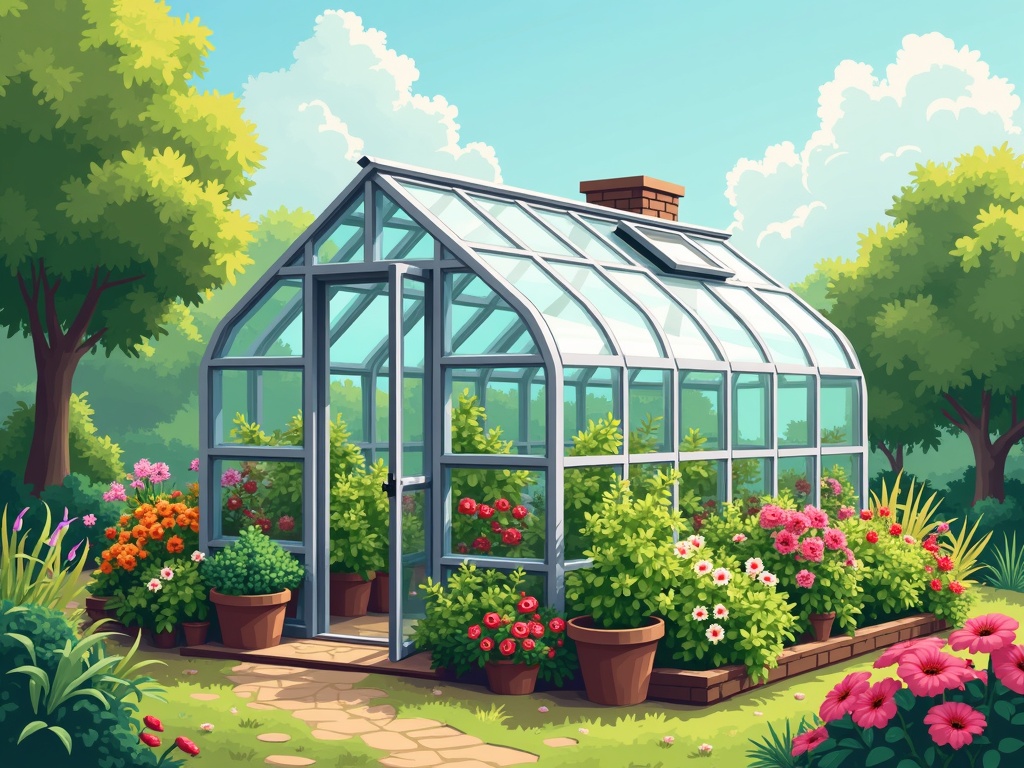
Choosing the Right Plants for Your Backyard Greenhouse: A Thriving Ecosystem
The beauty of a backyard greenhouse lies in its ability to accommodate a diverse range of plants. However, choosing the right plants is crucial for creating a thriving ecosystem.
1. Climate Compatibility: Selecting Plants That Thrive in Your Greenhouse
Consider your local climate and the conditions within your greenhouse when selecting plants. Choose plants that thrive in the temperature and humidity ranges you can provide.
For example, if you live in a cold climate, you might focus on growing cool-season vegetables like lettuce, spinach, and kale in your greenhouse during the winter months. If you live in a warm climate, you might grow tropical plants like orchids, hibiscus, and bananas.
2. Plant Groupings: Creating a Symbiotic Environment
Group plants with similar needs together. For example, plants that require high humidity should be grouped together, while plants that prefer drier conditions should be placed in a separate area.
Consider companion planting, the practice of planting different species together to benefit each other. For example, basil can repel pests that attack tomatoes, while marigolds can deter nematodes.
3. Vertical Gardening: Maximizing Space with Climbing Plants and Hanging Baskets
Vertical gardening is a great way to maximize space in your greenhouse. Use trellises, stakes, or hanging baskets to grow climbing plants like tomatoes, cucumbers, and beans.
Hanging baskets are also a great way to display flowering plants like petunias, fuchsias, and geraniums.
4. Year-Round Gardening: Planning for Seasonal Changes
Plan your greenhouse plantings to ensure a continuous harvest throughout the year. Start seeds indoors in the late winter or early spring to get a head start on the growing season.
Plant cool-season vegetables in the fall for a winter harvest. Overwinter tender plants in your greenhouse to protect them from frost.
Maintaining Your Backyard Greenhouse: Ensuring Long-Term Success
Maintaining your backyard greenhouse is essential for ensuring its long-term success. This involves regular cleaning, pest and disease control, and soil management.
1. Cleaning and Sanitation: Preventing Pests and Diseases
Clean your greenhouse regularly to prevent the buildup of pests and diseases. Remove dead leaves and debris, and disinfect surfaces with a bleach solution.
Control weeds inside and outside the greenhouse. Weeds can harbor pests and diseases that can spread to your plants.
2. Pest and Disease Control: Organic and Sustainable Methods
Monitor your plants regularly for signs of pests and diseases. Take action immediately to prevent infestations from spreading.
Use organic and sustainable pest control methods whenever possible. Options include insecticidal soap, neem oil, and beneficial insects like ladybugs and lacewings.
Practice crop rotation to prevent soilborne diseases from building up.
3. Soil Management: Maintaining Healthy Soil
Healthy soil is the foundation of a thriving greenhouse. Test your soil regularly to determine its pH level and nutrient content.
Amend your soil with compost or other organic matter to improve its structure and fertility.
Avoid using chemical fertilizers, which can harm beneficial soil organisms.
4. Watering and Fertilizing: Providing Essential Nutrients
Water your plants regularly, but avoid overwatering. Water deeply and less frequently to encourage deep root growth.
Fertilize your plants regularly with a balanced fertilizer. Choose a fertilizer that is specifically formulated for greenhouse plants.
Troubleshooting Common Greenhouse Problems: Addressing Challenges
Even with careful planning and maintenance, you may encounter problems in your backyard greenhouse. Here are some common issues and how to address them:
1. Temperature Fluctuations: Maintaining a Stable Environment
Temperature fluctuations can stress plants and make them more susceptible to pests and diseases. Make sure your heating and cooling systems are working properly.
Use shade cloth to prevent overheating during the summer months. Insulate your greenhouse to prevent heat loss during the winter months.
Open and close vents manually to regulate temperature.
2. Humidity Imbalances: Managing Moisture Levels
High humidity can lead to fungal diseases, while low humidity can stress plants. Adjust your ventilation and watering practices as needed.
Use a humidifier or dehumidifier to maintain optimal humidity levels.
3. Pest Infestations: Identifying and Controlling Pests
Monitor your plants regularly for signs of pests. Identify the pests and take action immediately to control them.
Use organic and sustainable pest control methods whenever possible.
Consider introducing beneficial insects to control pest populations.
4. Disease Outbreaks: Preventing and Treating Diseases
Prevent disease outbreaks by maintaining a clean and sanitary greenhouse. Provide good ventilation and avoid overwatering.
If you notice signs of disease, take action immediately to treat the affected plants.
Use organic fungicides to control fungal diseases.
Beyond the Basics: Advanced Greenhouse Techniques
Once you've mastered the basics of backyard greenhouse growing, you can explore more advanced techniques to enhance your gardening experience.
1. Hydroponics: Growing Plants Without Soil
Hydroponics is a method of growing plants without soil, using nutrient-rich water solutions. This technique can be used to grow a wide variety of vegetables, herbs, and flowers in your greenhouse.
Discover Proven Techniques to Preserve Your Food Year-Round and Enjoy Less Waste with More Freshness
Hydroponics offers several advantages over traditional soil-based gardening, including faster growth rates, higher yields, and reduced water consumption.
2. Aquaponics: Combining Aquaculture and Hydroponics
Aquaponics is a sustainable food production system that combines aquaculture (raising fish) and hydroponics (growing plants without soil). Fish waste provides nutrients for the plants, while the plants filter the water for the fish.
Aquaponics is a closed-loop system that requires minimal inputs and produces both fish and vegetables.
3. Controlled Environment Agriculture (CEA): Optimizing Growing Conditions
Controlled Environment Agriculture (CEA) is a technology-based approach to food production that involves controlling environmental factors such as temperature, humidity, light, and carbon dioxide levels to optimize plant growth.
CEA can be used to grow crops year-round, regardless of the external climate.
The Rewards of a Backyard Greenhouse: More Than Just Plants
A backyard greenhouse is more than just a place to grow plants; it's a sanctuary, a place to connect with nature, and a source of fresh, healthy food. The rewards of owning a greenhouse extend far beyond the garden.
1. Extending the Growing Season: Year-Round Gardening
One of the primary benefits of a backyard greenhouse is that it allows you to extend the growing season. You can start seeds earlier in the spring, continue harvesting vegetables later in the fall, and even grow crops year-round in colder climates.
2. Growing Exotic Plants: Expanding Your Horticultural Horizons
A greenhouse allows you to grow exotic plants that wouldn't survive outdoors in your climate. You can cultivate tropical fruits, orchids, and other unique plants from around the world.
3. Therapeutic Benefits: Stress Relief and Relaxation
Gardening is a therapeutic activity that can reduce stress and improve your mood. Spending time in your greenhouse, tending to your plants, can be a relaxing and rewarding experience.
4. Fresh, Healthy Food: Sustainable Living
Growing your own food in a backyard greenhouse is a sustainable way to provide your family with fresh, healthy fruits, vegetables, and herbs. You'll know exactly where your food comes from and how it was grown.
Starting a backyard greenhouse is an investment in your health, well-being, and the environment. With careful planning, proper maintenance, and a little bit of passion, you can create a thriving oasis in your own backyard. So, embrace the journey, experiment with different plants and techniques, and enjoy the countless rewards that a backyard greenhouse has to offer.